
.svg)

A practical guide to the systems that matter around 10, 20, 40, and 75 employees.
Most founders ask the question a little later than they wish they had.
The business is growing. Revenue is moving. Payroll is climbing. The founder is trying to look ahead, but keeps getting pulled back into hiring decisions, manager issues, onboarding gaps, and employee questions that somehow still need CEO airtime.
The question sounds simple.
What do we actually need to build next?
That question is more useful than “Do we need HR yet?” because it starts in the right place.
A smart CEO does not start with headcount. They start with the destination.
Where is the company trying to go over the next 12 to 18 months? More revenue? More locations? A second management layer? A less founder-dependent business? Stronger execution from the same payroll base?
Once that is clear, the next job is to get honest about the current people landscape. How good is hiring? How consistent is onboarding? Which managers are leading well and which are improvising? Where does accountability get fuzzy? Which people decisions still climb back to the founder?
Then, and only then, can you decide what to build first, what to wait on, and where the Modern HR Roadmap should start.
That order matters because companies in different parts of the growth journey need different things.
A company still getting to product-market fit can survive with HR tactics. A company proving repeatability starts to feel those tactics fray. A company in Growth Mode needs a strategy.
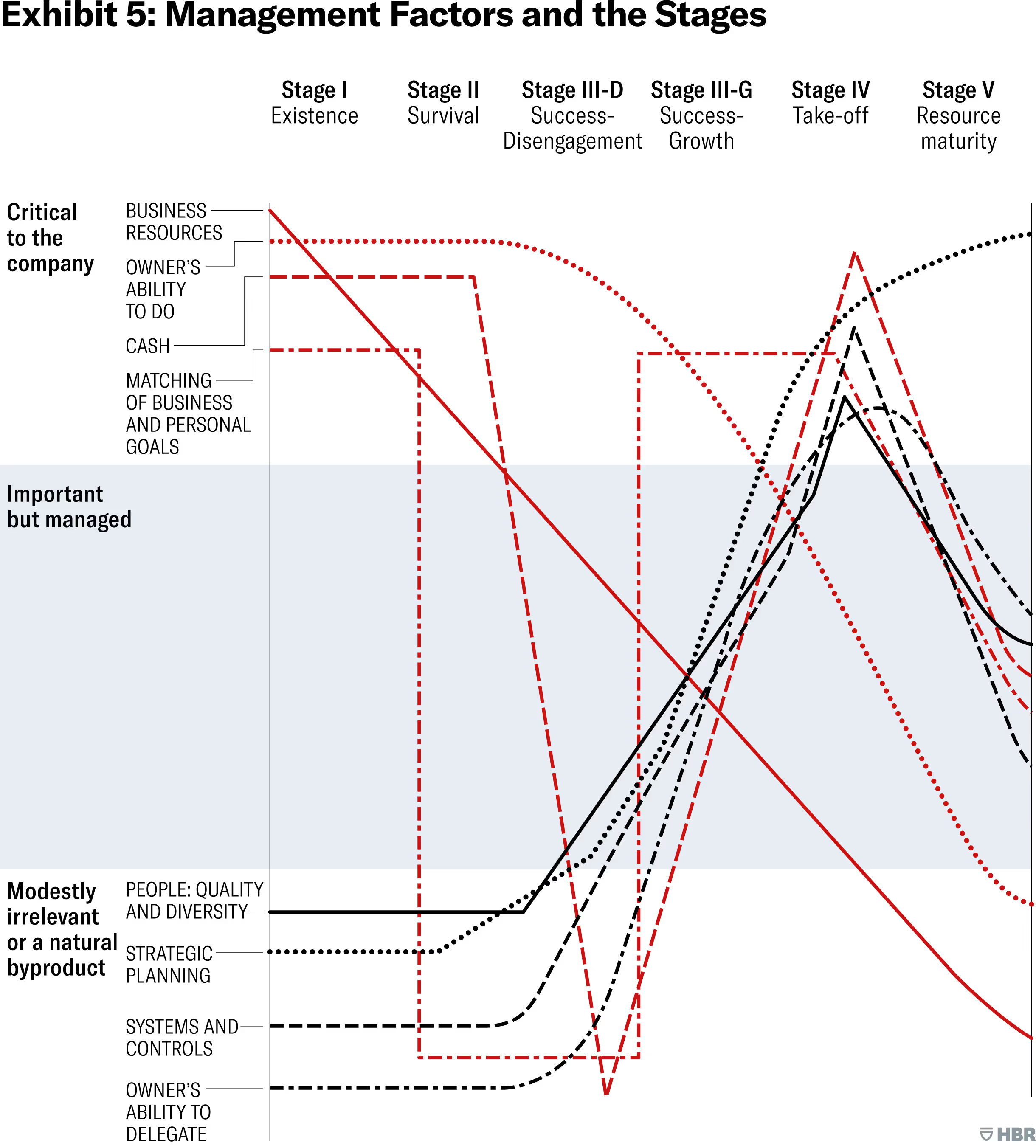
Harvard Business Review’s work on business growth is still one of the clearest explanations of why. As a company grows, the owner’s role, the structure, and the systems all need to change. What made the business nimble at one size can make it fragile at the next.
Castle sees this at a very predictable point. Most founders start to feel the strain around 20 people. Payroll is up. Results are not keeping pace. Managers are learning in public. The founder feels more like the HR department than the founder. Castle’s answer is not to bolt on random support. It starts with the company’s growth goals, reads the current people landscape, then runs a Roadmap sprint against the closest shark to the boat.
So what does that look like in practice?
Let’s walk it through.
Around 10 people, the company can still outrun a lot of sloppiness.
Roles blur, but everyone can still sort things out quickly. Standards are mostly verbal, but the founder is close enough to correct drift in real time. Hiring is instinctive, and sometimes that works because the business is still small enough to absorb a few rough edges.
This is the period where HR tactics are usually enough.
You need clean contracts. Payroll that works. Core policies. Basic hiring discipline. A simple way to store documents. Clear enough roles that the next hire is not a mystery.
What you do not need is a heavy process layer that slows the business down before the business is ready for it.
A founder at this point should focus on clarity. Who owns what? What outcomes matter in each seat? What do the next one or two hires need to accomplish? If you cannot answer those questions cleanly, adding more people will make the confusion bigger, not smaller.
One useful test: if you asked your leadership team to describe the next critical hire, would you hear one version of the role or four?
Around 20 people, the tone changes.
The founder’s calendar gets heavier. New managers are still learning how to lead. Onboarding quality starts to vary depending on who owns the handoff. Interview quality changes from role to role. Founders who could once solve every issue in the room start noticing that the same kinds of people problems keep returning in slightly different clothes.
This is the point where tactics start to fray.
The business still does not need a bloated HR department. It does need a strategy for how people decisions get made.
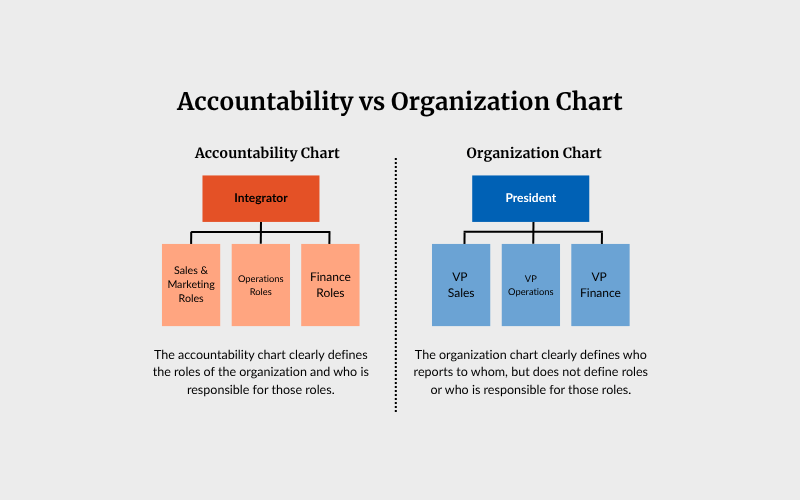
At this point, the most useful build is often an accountability chart. Not because it looks tidy in a workshop, but because it answers the questions that quietly chew up founder time. Who owns hiring? Who owns onboarding? Who coaches managers? Who decides when performance issues escalate? Who is responsible for the standards the business says it cares about?
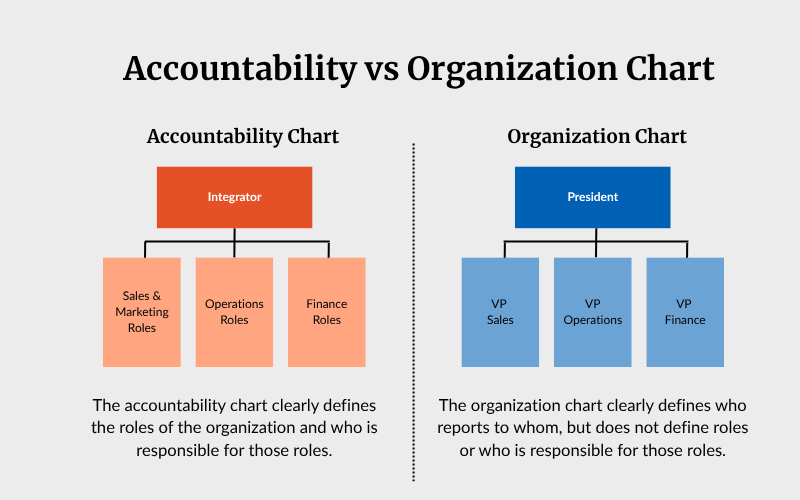
Once those lanes are clear, the next builds usually sit close together: better role scorecards, a more consistent interview process, 30/60/90 onboarding, and simple weekly manager check-ins.
Gallup’s onboarding research explains why this part matters. Only 12% of employees strongly agree their company does a great job onboarding, and managers have an outsized effect on whether that experience helps a new hire become useful quickly. If your company is growing and the hiring-to-onboarding handoff is shaky, you are paying for it in slower ramp-up, softer execution, and avoidable frustration.
This is often where founders make a costly mistake. They think the answer is a person. Sometimes it is. Often the answer is a system.
If you hire around the symptom before you have clarified ownership, the mess just gets redistributed.
Around 40 people, and certainly by 75, the business needs more than tactical coverage.
This is where HR strategy becomes real.
A few strong managers are no longer enough. A founder cannot personally keep standards consistent across every team. Compensation decisions get more sensitive. High performers feel the drag of weak systems faster. Culture stops travelling by proximity. The business is no longer deciding whether to build systems. It is deciding whether to build them deliberately or let them form by accident.
This is where the Modern HR Roadmap becomes especially useful.
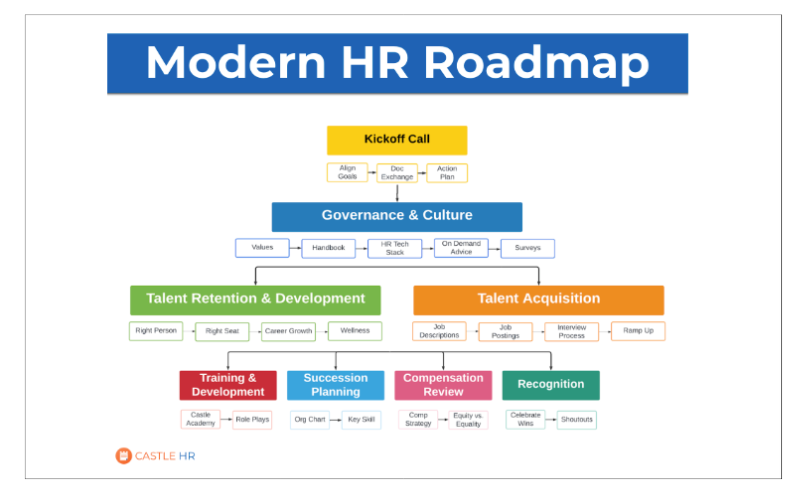
A company in Growth Mode usually needs a proper manager system: regular 1:1s, clearer expectations, a performance rhythm, better handling of hard conversations, and a cleaner way to spot when someone is in the wrong seat before the team has spent six months paying for it.
It also needs stronger governance. The bigger the company gets, the more expensive inconsistency becomes. Two managers making two different calls on the same issue is not a culture quirk at this point. It is a scaling problem.
Gallup’s research on managers makes the point hard to ignore: around 70% of the variance in a team’s engagement is tied to management. McKinsey’s people-performance research adds the business case: companies that focus on people’s performance are 4.2 times more likely to outperform peers, with 30% higher revenue growth and lower attrition. Growth Mode companies do not get those outcomes by hoping their managers figure it out.
A business at roughly 40 people often needs:
- a clear manager cadence,
- more disciplined reviews,
- cleaner hiring standards,
- better data through its HR tech stack,
- and more deliberate development for new managers.
By 75 people, the focus widens again. Succession starts to matter. Compensation needs a framework. Recognition matters because standards now have to travel through the organization, not just from the founder’s behaviour. The company needs bench strength, not just a few heroes.
If you are reading this and thinking, “Fine, but I still need to know what to do first,” use this sequence.
Start with your growth goal. Be concrete. “We want to double revenue” is fine. “We want to grow without the founder being in every hiring, performance, and compensation conversation” is even better.
Then map the current people landscape. Where is the friction? Hiring quality? Onboarding? Manager inconsistency? Accountability? Compensation? Seat clarity?
Then ask a tougher question: which of those problems is most likely to slow the company down over the next two quarters?
That is where the Roadmap starts.
For one company, the answer will be hiring. For another, it will be manager quality. For another, it will be the fact that Ops is quietly carrying half the people system because no one has designed the handoffs properly.
A 10-person company does not need the same system as a 40-person company. A 40-person company should not still be improvising the same basics it needed to settle at 20. A 75-person company should not be making pay decisions from the gut and calling it culture.
That is why the headcount examples are useful, but only as guides.
Around 10 people, build clarity.
Around 20, build accountability and a real ramp-up process.
Around 40, build a manager system.
Around 75, build depth in succession, compensation, and recognition.
The numbers matter less than the shift.
Early on, HR tactics help the company keep moving.
Later, the business needs an HR strategy that supports where the company is headed next.
That is the move founders often feel before they can explain it. They know the company is carrying more people, more managers, and more consequences. They know the old way is getting expensive. What they need is a way to decide what to build next without overbuilding or hiring around the wrong problem.
That is what the Modern HR Roadmap gives them.
Go back to the question from the top.
What do you actually need to build next?
Start with the destination.
Read the current landscape honestly.
Then build the next system, not the next patch.
That is how a growing company gets out of founder-led firefighting and into strategic systems.
.svg)