
.svg)

High-performance teams are not hoped into existence. They are engineered.
Most consulting engineering firms do not feel the shift all at once.
It arrives in small, easy-to-dismiss moments.
A partner gets pulled into a compensation conversation that should have stayed lower in the business. A project lead asks for help handling a performance issue. A hiring decision that looked simple turns into three meetings because no one is fully clear on what the role should actually be accountable for.
Nothing about that feels dramatic.
That is exactly why it is so easy to miss.
Around 20 people, many consulting engineering firms, begin paying a growth tax they did not know existed. Partners become the catch-all for hiring, performance, manager support, and the “quick people questions” that quietly consume a week. The projects are still moving. The clients are still being served. But the firm begins to feel heavier than it should.
That weight has a cost.
In engineering services, people are not an overhead line hiding in the background. They are the business. Statistics Canada’s most recent industry data show that salaries, wages, commissions, and benefits accounted for 47.6% of total operating expenses in engineering services in 2024.
When a firm that size is leaking performance, clarity, or retention, it rarely looks urgent at first. It just slowly bleeds margin, delivery quality and partner time.
That is the point where the old playbook stops working.
.png?width=2680&height=1774&name=Stop%20Guessing%2c%20Here%20Is%20How%20To%20Continue%20To%20Grow%20(1).png)
Most partners do not reach this point because they have become weak leaders.
They reach it because the business has changed shape.
The same partner judgment and proximity that helped the firm grow early on start creating friction later. The firm is no longer small enough to run on memory, improvisation, and a few strong people picking up the slack for everyone else. It now needs something stronger than good intentions.
It needs a system.
That does not mean bureaucracy. It does not mean an endless process for process’s sake.
It means the people side of the firm has to become as intentional as the technical side.
That is where the line matters:
High-performance teams are not hoped into existence. They are engineered.
The firms that scale well understand this sooner than the ones that struggle. They stop treating people issues like isolated interruptions and start treating them like design problems. They stop assuming strong technical contributors will automatically become strong managers. They stop hoping role clarity will sort itself out. They stop treating hiring like an urgent task and performance like an annual event.
They start building the system.
In engineering firms, people issues rarely show up with an HR label.
They show up as delivery risk.
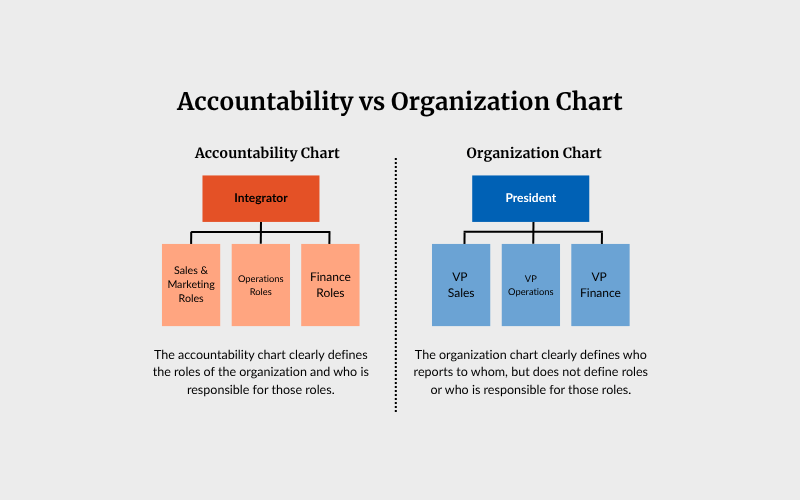
A good technical lead gets promoted and is expected to know how to lead.
A project manager can build a schedule but doesn’t know how to hire effectively.
A role remains too broad because no one has redrawn the seat for the current need.
A performance issue lingers because no one is fully confident they own the call.
The partners quietly become load-bearing walls because too much judgment lives in their heads instead of in the business.
Most firms do not call that an operating model problem.
They call it “growth.”
But growth is not supposed to feel this heavy forever.
At 20+ people, the business is no longer asking the partners to solve occasional people issues. It is asking them to keep the entire people system coherent by force of personality.
That does not scale.
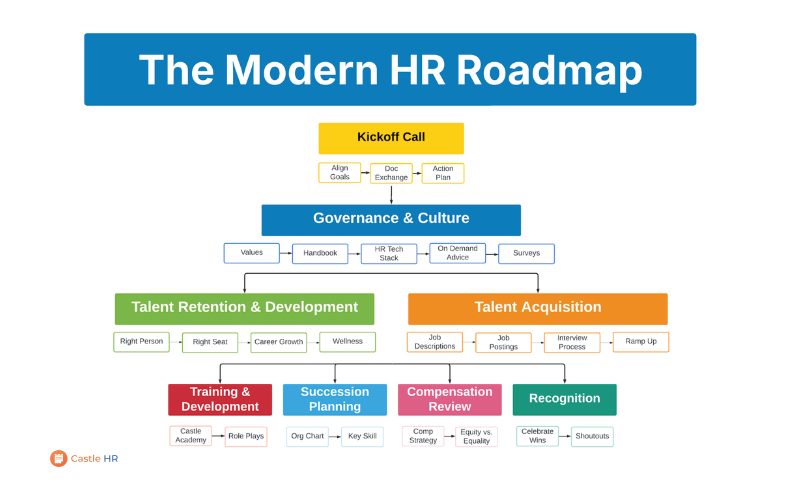
Castle HR has supported engineering firms like Isaac Operations, Gerrits Engineering, Purpose Building, Ecovert, and others by helping them build a custom people operating system that helped them reach their goals.
Not by layering on “more HR” for the sake of it.
By getting practical about the few things that make a firm easier to run.
Sometimes that starts with role clarity because nobody is truly clear on who owns what anymore. Sometimes it starts with a stronger performance rhythm because managers are winging hard conversations and partners keep getting pulled back in. Sometimes it starts with a sharper hiring process because the wrong candidates keep making it too far, and the right ones filter themselves out. Sometimes it starts with governance fundamentals (contracts, handbook language, health and safety, HRIS workflows) because too many people decisions still live in old files, tribal knowledge, and memory.
The point is not to tackle everything at once.
The point is to stop asking the partners to absorb all the friction personally.
That is what a modern people operating system does.
It does not make the firm less human.
It engineers the firm to be less dependent on partner heroics.
Firms that make this transition well usually do not describe the initial changes as dramatic.
They describe them as relieving.
Hiring gets sharper because seats are properly defined.
Managers get stronger because expectations are clearer and feedback happens sooner.
Performance issues get addressed earlier.
Partners spend less time rescuing routine situations.
The best people stop carrying the whole firm on their backs.
That is what progress looks like with a stronger HR operating system.
This is why Castle HR is excited to partner with ACEC-Ontario.
ACEC-Ontario helps firms improve the environment they operate in through advocacy, risk management, support services, and knowledge-sharing. Castle HR complements that by helping firms strengthen the internal systems that enable them to actually scale within that environment.
That combination matters.
Because once a consulting engineering firm crosses 20 people, the next stage is rarely won by partner effort alone.
It is won by firms that intentionally engineer high-performance teams.
If any part of this feels uncomfortably familiar, that is useful.
And that is not bad news.
It is simply the moment the firm needs a better system than hope.
Most firms at this stage don't need a full overhaul. They need one or two things fixed well: a clearer set of seats, a real performance rhythm, a hiring process that filters for the right people and the rest gets lighter from there.
The hard part isn't the work. It's knowing which lever to pull first.
Book an Intro Call with me to talk through this.
No pitch deck, no pressure. Just a practical conversation about where your firm is and what the first move looks like.
.svg)