
Why a Founder’s Job Must Change at 20 People

Tom Nickalls
Most founders do not notice the moment their job changes.
At the start, the company grows because they are everywhere.
They rewrite the copy.
They catch the mistake.
They closed the hard deal.
They settle the disagreement.
They make the call nobody else wants to make.
That works for a while.
But when the company reaches ~20 people, especially in software and professional services, that same strength starts to create drag.
The founder is still smart enough.
Still committed and focused.
Working 60+ hours a week.
But the company no longer grows in proportion to the founder’s effort.
This is the point most leaders never get warned about.
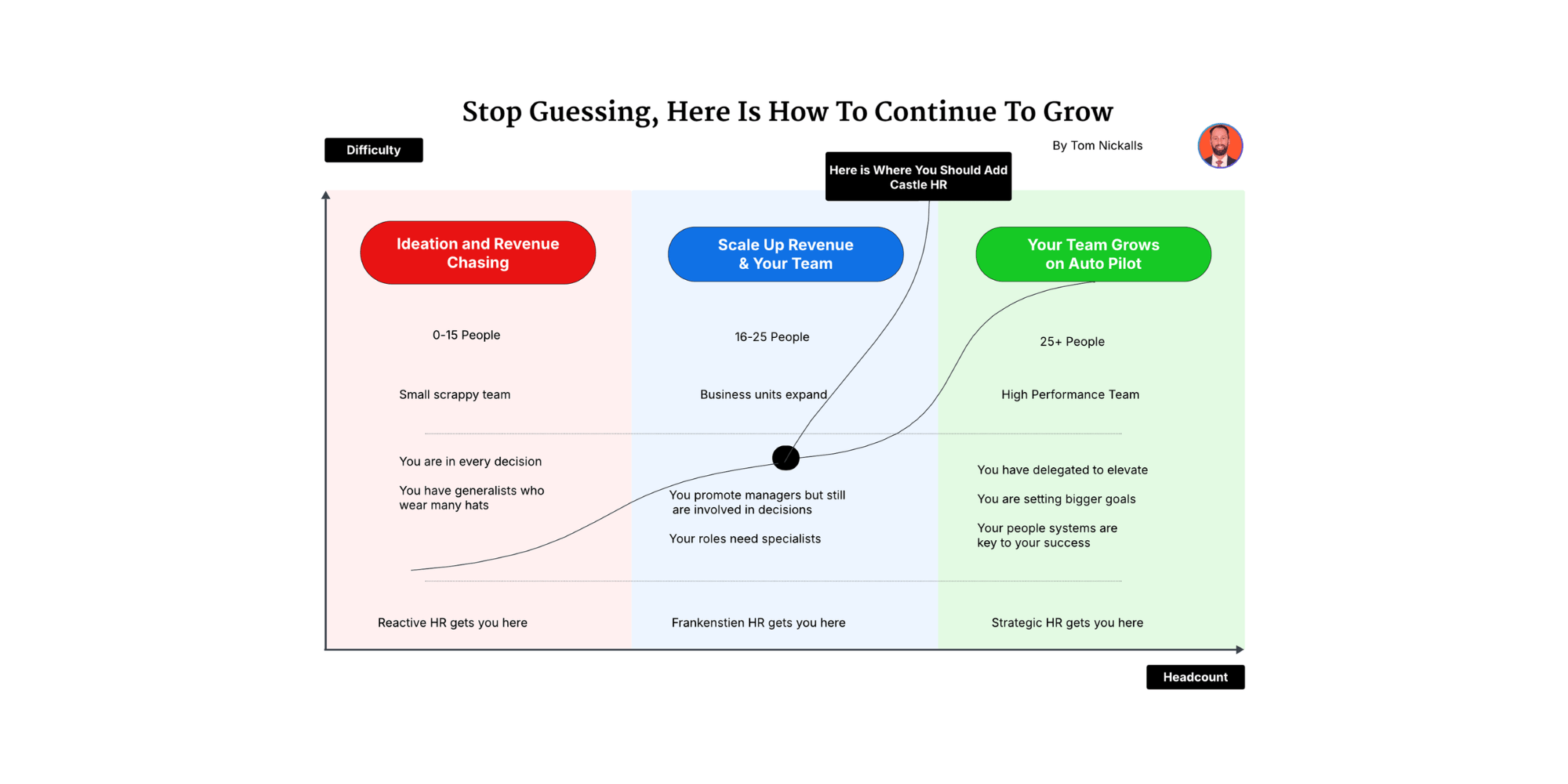
.png?width=2680&height=1774&name=Stop%20Guessing%2c%20Here%20Is%20How%20To%20Continue%20To%20Grow%20(1).png)
Harvard Business Review made the underlying point years ago: as a small business grows, what has to change is not only revenue and headcount but also the owner’s involvement, the structure, the systems, the strategic goals, and the way the business is managed.
In plain language, the company has entered a new stage.
The founder is no longer trying to prove the business works.
The founder is now trying to build a company that can work without the founder baked into every workflow.
Why companies stall when they stay founder-led
Founder-led companies feel fast because one person can override almost anything.
That is useful when the business is small, and every decision is a high signal.
It gets expensive later.
When the founder remains the default closer, approver, tie-breaker, mediator, editor, recruiter, and HR backstop, headcount rises faster than actual capacity.
The company can get bigger.
But it does not get stronger.
The Entrepreneurial Operation System (EOS) offers a useful way to describe the transition. They call it Delegate and Elevate: leaders create more value when they intentionally move work to the right people in the right seats, rather than staying buried in work that no longer belongs to them.
That is not a productivity trick.
It is a growth requirement.
Every decision the founder still has to make is evidence that the system has not yet been built.
When Does a Founder’s Job Evolve?
Product-market fit is a real milestone.
It means customers are paying for your offering.
It means even more growth is possible.
What it does not mean is that the company is built to scale.
You are at a new level, and that means new devils.
Once the market says yes, the biggest growth lever is no longer the founder’s effort or the product alone.
It is the company’s ability to turn goals into execution through other people.
That is a shift from Product-Market Fit to Growth Mode.
A business that can sell, deliver, collect cash, hire, and manage performance in a way that does not depend on the founder stepping into every gap.
A business that can make money while leadership sleeps.
A business where output comes from systems and standards, not proximity to the founder.
That is the shift from founder-led to system-led growth.
Most founders miss this opportunity and wait until growth stalls to address it. Which is probably why Castle HR’s average client has 29.2 people.
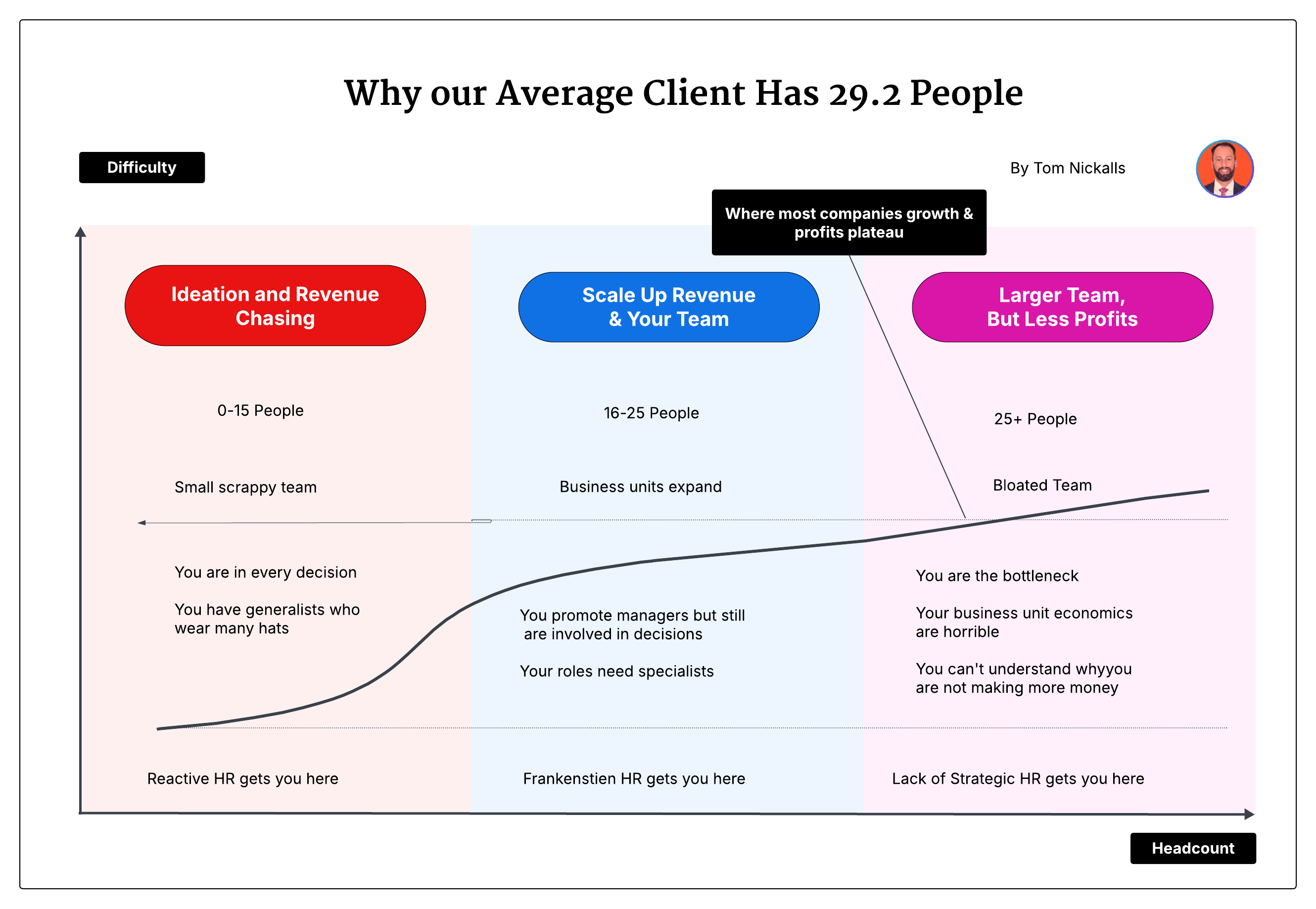
Why does this show up earlier in software and professional services?
This handoff happens early in software and professional services because those businesses scale through people faster than founders expect.
The product may be software, but the output may be delivery, advice, design, code, implementation, or service.
The growth engine is still human:
New hires must ramp faster.
Performance has to remain high.
Client experience has to stay steady.
Managers have to be force multipliers.
Decisions must happen without the founder in the room.
With ~20 people, the company can no longer rely on a founder’s proximity to keep it all aligned.
That is why the founder’s calendar changes before the P&L tells the full story.
More approval requests.
More escalations for help.
More conversations that end with, “Can you just take a look at this?”
The earliest sign of the bottleneck is often calendar load.
The real cost is missed goals.
What that looks like in real life
A software founder wants to go from $3-5M to $10-15M.
So the company hires.
More sales capacity.
More customer success.
More product and implementation help.
The founder expects relief.
Instead, they get more people to manage, more ambiguity to resolve, and more decisions climbing back uphill.
The sales manager still needs help closing. The product still waits for tie-breakers. Customer issues still bounce to the founder because nobody trusts the edges of their authority.
The company added payroll.
It did not add enough independent execution.
A professional services founder feels the same thing in a different form.
The firm is busy, clients are there and revenue is growing.
But delivery exceptions keep surfacing. Team leads are unclear on what they own. Finance still depends on the founder to interpret the numbers.
A high-performing individual contributor gets promoted because the team “needs a manager,” and six months later, the role is wobbling because no one ever defined what “winning” in that seat actually meant.
The founder says the company has a people problem.
Often, the company faces a founder bottleneck.
Managers Are The Key To System-Led Success
This is why the pain often shows up first in management.
Managers are the multiplier.
Gallup has found that managers account for about 70% of the variance in employee engagement and output.
McKinsey has made a similar point from the operating side: middle managers sit at the centre of how work actually gets done, and strong middle managers are a business imperative, not a nice-to-have.
When managers are underbuilt, the founder feels it everywhere:
- Standards drift
- Decisions slow down
- Accountability gets fuzzy
- Underperformance lingers
- Top performers get frustrated
- The founder gets pulled back in
That is why so many companies think they have a talent problem when they really have a management system problem.
Clarity is the operating system
Patrick Lencioni’s work is helpful here because he keeps coming back to one simple idea: clarity is not a branding exercise. It is what helps leaders make decisions and solve problems.
That is why the shift to system-led growth matters.
Systems are clarity made operational.
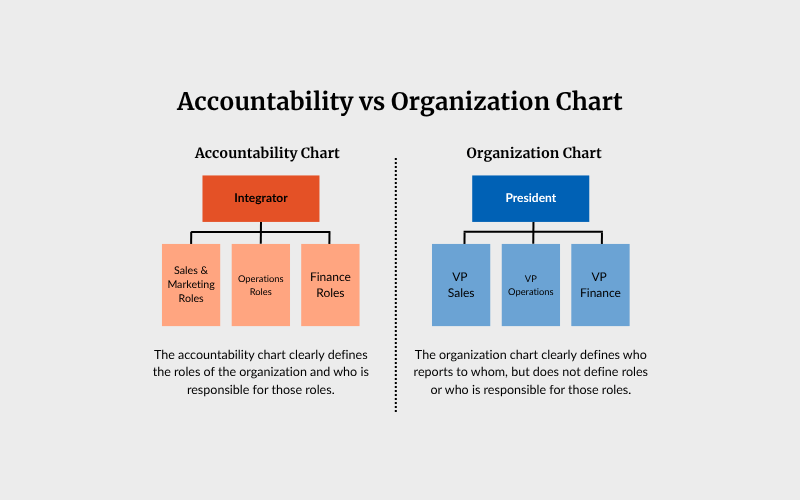
Clear seats.
Clear standards.
Clear ownership.
Clear scorecards.
Clear decision rights.
Clear management expectations.
When those are missing, founders must spend time in the business.
When those are in place, founders gain freedom.
A useful way to think about this
At this stage, many companies are no longer fully reactive, but they are not yet strategic either.
They are in the messy middle with bits of process and improvisation. They have a few tools and workarounds with some strong people, but no cohesion.
That is the zone where companies start to feel heavier before they feel stronger.
That is also the zone where the next level of growth is won or lost.
What is the founder’s new job?
The founder’s new job is no longer to be the glue.
It is to design the system, and here is how we built the HR system for 250+ companies:
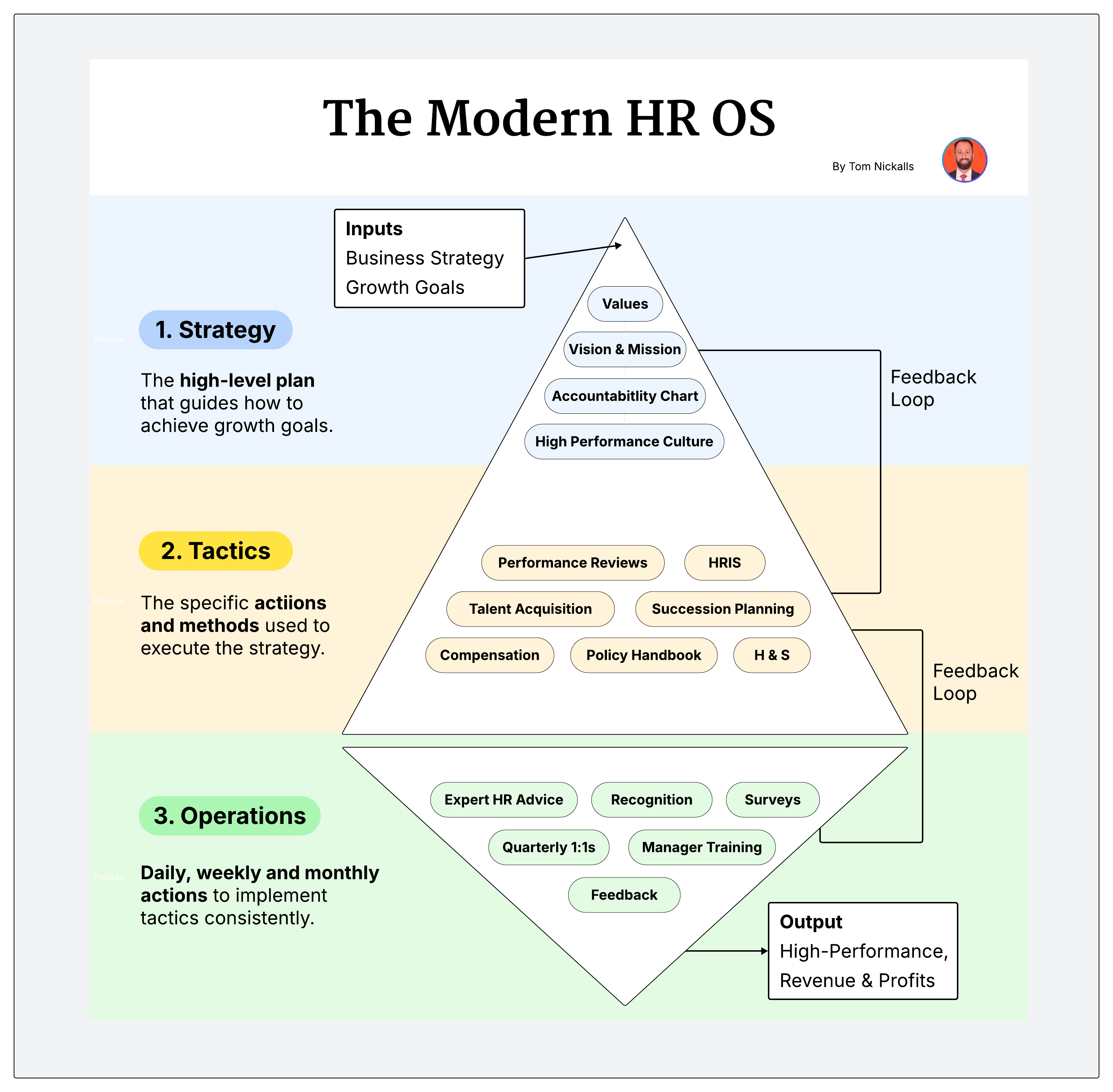
That starts with one hard shift.
Stop asking, “How do I stay on top of all of this?”
Start asking, “What must this company own, function by function, to hit the next goal without me standing in the middle of it?”
That is where Jim Collins’ logic matters. Great companies do not begin with titles or sentiment. They begin with the right people in the right seats.
The seat comes first, then the person.
Then the system that helps the person win.
In practical terms, a founder moving into system-led growth has to do five things:
- Name the next goal clearly
Revenue, margin, delivery capacity, expansion, or all of the above. - Define what each function must own to make that goal real
Sales, finance, operations, marketing, HR. - Build systems where founder heroics are still filling the gaps
The gap is the clue. - Upgrade managers before adding more complexity
More headcount without stronger management usually creates more drag. - Stop using the founder’s calendar as the backup system
If everything still escalates to one person, the company has not changed yet.
What does being a growth company mean?
A growth company is not just a larger startup.
A growth company is one that can translate goals into execution without relying on constant founder intervention.
That means:
- Operations are defined
- Finance shares numbers faster
- Sales runs on a repeatable process
- Marketing compounds instead of resetting
- HR builds managers, accountability, and consistency
- The founder is no longer the operating system
That is the real standard.
If the company crosses ~20 people and still behaves as if every important decision belongs to the founder, growth will eventually stall.
The company may still grow for a while.
It will just do it with more friction, more payroll, and less confidence than it should.
The Conclusion
Once the market has validated the product, the founder’s next great work is not to squeeze more effort out of the same model.
It is about building the systems that enable the business to perform at a higher level.
That means:
Better managers.
Sharper role clarity.
Cleaner accountability.
A repeatable sales engine.
More reliable financial visibility.
A marketing engine that compounds.
An operating model that survives growth.
And a people system that develops leaders instead of hoping they appear.
That is what being a growth company means now.
A company that can keep winning because the founder is no longer the bottleneck.
Two questions worth taking to the next leadership meeting
- Where is the founder still the backup plan?
- Which function still depends on founder effort rather than a system?
Those two questions usually reveal the next bottleneck faster than any other strategy ever will.
.svg)